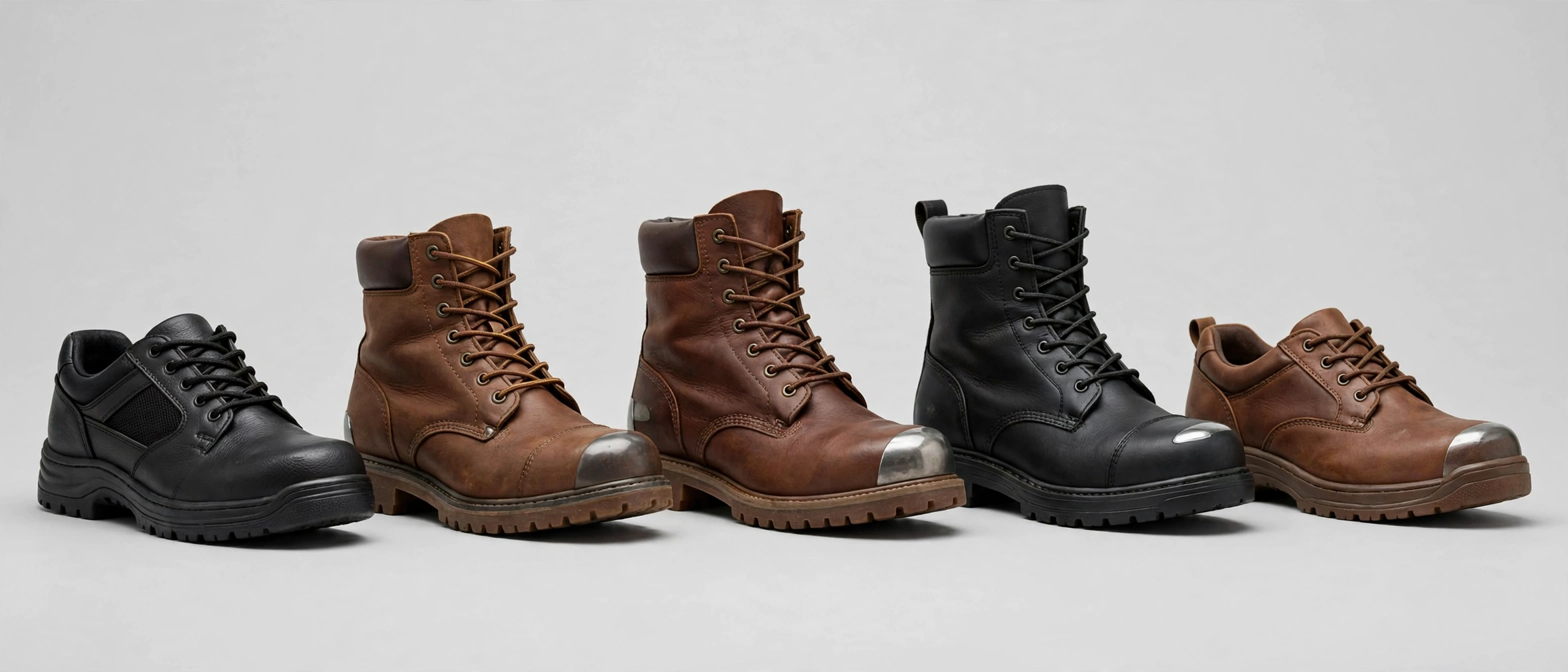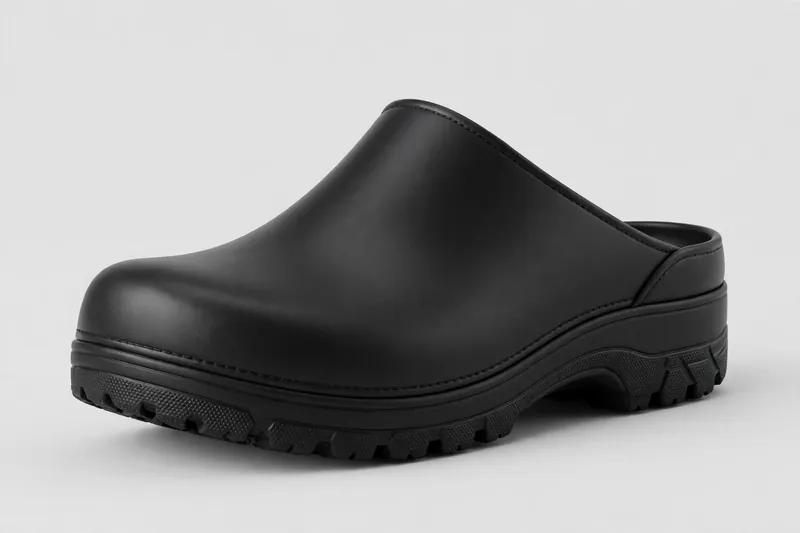
A dry warehouse floor and a wet kitchen floor do not ask the same thing of a shoe. Water, cooking oil, grease, soap, food waste and rain all change how a sole grips, how an upper holds up, and how quickly a shoe wears out. Buyers who order slip resistant safety shoes for wet and oily workplaces therefore need a different checklist from buyers choosing shoes for a dry site: the floor itself, the sole, the upper, the protection you should not trade away, fit, cleaning, and how to test a sample before you order in bulk.
1. Start with the floor, not the shoe
Before comparing shoes, describe the floor your workers actually stand on.
- What makes it slippery? Clean water, soapy water, cooking oil, machine grease, food scraps, mud and rain behave differently. Oil is usually the hardest case: it coats the tread and can soften some sole materials over time.
- Is the liquid constant or occasional? A kitchen floor that is washed down several times a shift, a food-processing line with regular splashes, and a yard that only gets wet in rain are three different jobs.
- How deep does liquid get? Damp floors, puddles and standing water call for different uppers. A shoe that handles damp tiles may be the wrong choice where workers stand in water.
- What else is on the floor? Sharp offcuts, small metal parts and uneven surfaces add puncture and tripping risks on top of the slip risk.
- How long is the shift, and how hot is the workplace? In warm Southeast Asian climates, a shoe that traps heat will be taken off, adjusted or worn loosely — and a shoe that is not worn properly protects nobody.
Write these points down before you ask a supplier for options. A supplier can only match a shoe to a hazard you have described clearly.
2. The sole does most of the work
For slip resistant safety shoes, the outsole is the first thing to examine — but a slip-resistant label is a starting point, not a promise. No shoe is slip-proof.
Tread pattern. Look for a tread with open channels that let liquid escape from under the foot instead of trapping it there. A flat, smooth sole has nowhere for water or oil to go. Deep, widely spaced lugs suit muddy or uneven ground; finer, closely patterned treads suit smooth indoor floors such as tiles and sealed concrete. Ask the supplier which tread pattern they recommend for your floor type, and why.
Sole material and oil. Where oil or grease is present, ask specifically whether the sole compound is described as oil-resistant. Some compounds harden, crack or swell after long contact with oil, and a sole that has changed shape will not grip the way it did when new. Do not assume that every slip-resistant sole handles oil equally well.
Wear. Tread wears down, and worn tread grips less. Inspect soles regularly, and retire pairs whose tread has gone smooth, whose edges have rounded off, or whose soles have cracked. Compare options on expected service life, not on first price alone. Contact us for pricing details.
3. The upper: water-resistant is not waterproof
The upper decides whether feet stay dry — wet socks inside a shoe cause blisters, discomfort and workers who loosen their laces.
- Damp floors and splashes. A closed, low-cut shoe with a water-resistant upper is usually enough where liquid is splashed or washed across the floor but does not pool.
- Standing water and washdown work. Where workers stand in water or hose down an area, consider waterproof rubber boots. A tall, sealed boot keeps liquid out in a way a low shoe cannot, but it is heavier and warmer, so it suits shorter or less mobile tasks better than all-day walking jobs.
- Breathability trade-off. A fully sealed shoe keeps water out and also keeps heat in. In hot, humid workplaces, look for designs that balance splash resistance with airflow, and plan for socks that wick moisture.
4. Do not trade away toe and puncture protection
A wet floor does not remove the other hazards. Kitchens have dropped knives, pans and trolleys; workshops have sharp offcuts hiding under an oil film; warehouses have pallets and rolling loads. General safety guidance on foot protection notes that protective footwear is needed where falling or rolling objects or objects piercing the sole are present, and a construction safety quick card likewise pairs slip-resistant soles with puncture-resistant soles and safety toes. The lesson is simple: choose the slip-resistant sole and the toe and midsole protection your workplace needs, as one package.
Chef and kitchen work shoes illustrate the combination: they are made for commercial kitchens and food processing, where wet, greasy floors meet dropped objects and long standing shifts. Whatever category you buy from, check the same combination for your own floor: toe protection, puncture-resistant midsole where sharp objects are present, and a sole suited to your liquid.
5. Fit matters more on a slippery floor
A shoe that slips on the foot cannot grip the floor properly.
- Try shoes on with the socks workers actually wear. A fit checked in thin socks will feel different in thick work socks.
- Heel hold first. The heel should stay put when walking. A heel that lifts with every step wastes energy and invites ankle twists on wet surfaces.
- Toe room. Toes need room to spread when walking, but not so much room that the foot slides forward inside the shoe on a slope or a wet ramp.
- Laces and closures. On wet floors, a closure that comes undone is a tripping hazard. Check that laces, straps or slip-on designs stay secure through a full shift, and that workers can adjust them with wet hands.
6. Cleaning and inspection keep grip working
Oil and grease do not only sit on the floor; they coat the shoe. A sole caked in grease grips worse than a clean one.
- Clean soles regularly. Brush or wash off oil, grease and food waste after the shift, following the supplier's care guidance. Pay attention to the tread channels — packed channels cannot shed liquid.
- Dry shoes properly. Let shoes dry away from direct heat, and rotate pairs where possible so no pair stays damp shift after shift.
- Inspect on a schedule. Check tread depth, sole cracking, upper splits, seam gaps and closure condition. Retire damaged pairs rather than passing them to another worker.
7. Test a sample on your own floor before bulk ordering
Catalogue descriptions cannot tell you how a shoe grips your tiles, your concrete or your kitchen floor. Always test before committing to a large order.
- Order a trial. A trial order of 50 pairs lets you cover several sizes and more than one work area without committing to a full bulk quantity.
- Test in real conditions. Have workers wear the samples through normal shifts — wet, greasy and dry parts of the day — not just a short walk around a dry room.
- Collect worker feedback. Ask about grip on the worst part of the floor, comfort at the end of the shift, heat, weight, and whether the shoe stayed secure.
- Inspect the samples after the trial. Look at tread wear, sole changes after oil contact, seam condition and how the shoes cleaned up.
- Then scale up. Wholesale orders start at 300+ pairs, and OEM orders at 500 pairs, for buyers who want their own branding, colours or packaging. Contact us for pricing and MOQ details for your quantities, sizes and target market.
8. What to send with your inquiry
A clear inquiry gets a faster, more accurate quotation. Include:
- The type of liquid on the floor (water, oil, grease, soap, food waste) and how often the floor is wet
- The floor surface (tile, sealed concrete, rough concrete, metal plate, outdoor ground)
- Other hazards present (falling objects, sharp objects, standing water)
- Shift length, climate, and whether workers walk, stand or climb most of the day
- Sizes needed and the quantity you want to trial first
- Your target market and delivery location, so the supplier can confirm what can be supplied
Slip resistant safety shoes are not a generic purchase. The right pair is the one matched to your floor, your liquid and your shift — tested on site, cleaned on schedule, and replaced before the tread gives up.
Sources for general background: the United States Occupational Safety and Health Administration's foot-protection regulation page (foot protection guidance) and its construction personal protective equipment quick card (construction PPE quick card). These are general information sources only; always check the workplace rules that apply in your own market, and confirm any product specification with the supplier before ordering.
← Back to News